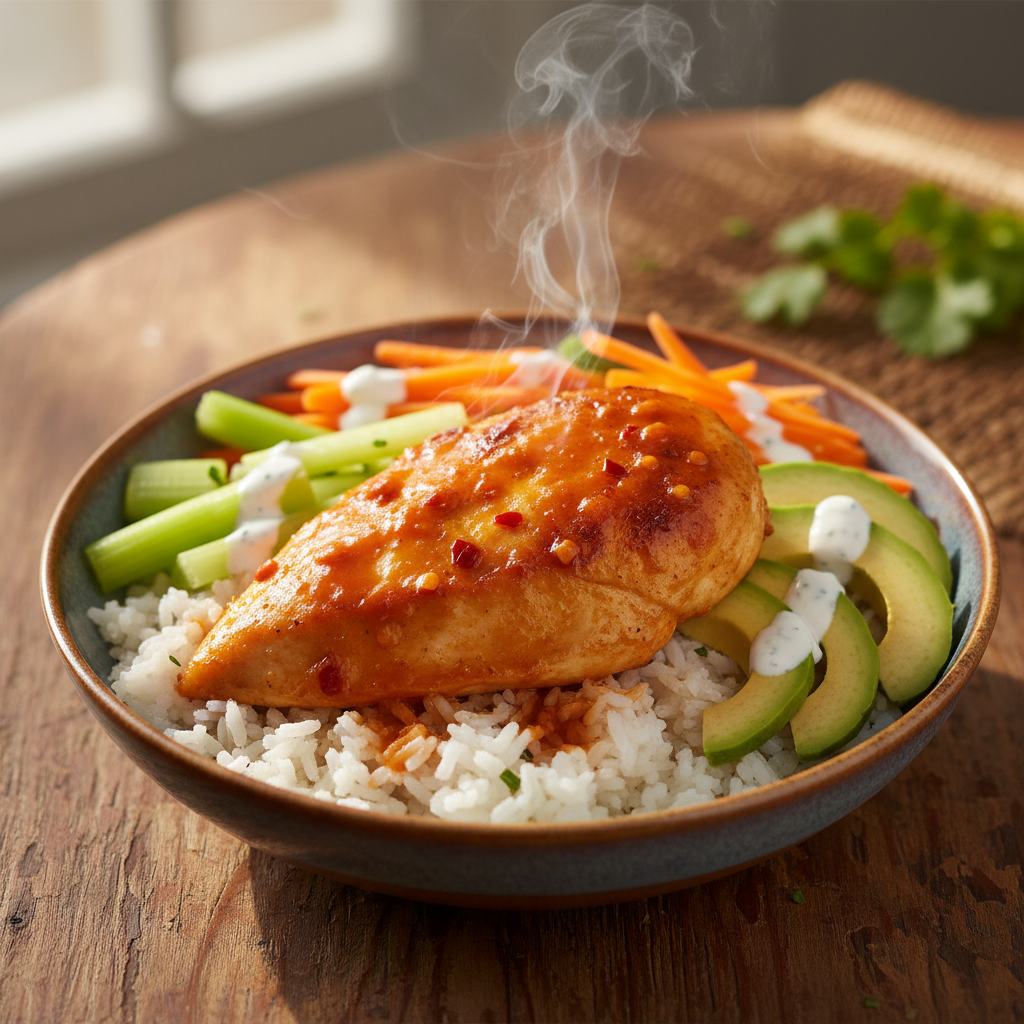

We all know the feeling. It’s 12:30 PM on a Tuesday, you’re staring at a sad sandwich or a wilting salad, and all you can think about is the spicy, tangy crunch of a buffalo wing. But let’s be honest—ordering a basket of wings for a workday lunch isn’t exactly practical. It’s messy, heavy, and likely to leave you needing a nap by 2:00 PM.
Enter the Buffalo Chicken Bowl. It captures everything you love about the classic American bar snack—the heat, the cooling ranch, the crisp celery—and transforms it into a nutritious, fuel-packed meal that powers you through the afternoon. It is the perfect marriage of indulgence and utility, stripping away the grease and bones while keeping the flavor front and center.
If you are looking to shake up your weekly meal rotation, this dish is your answer. It is incredibly versatile, fitting easily into low-carb, gluten-free, or high-protein diets. Plus, it holds up beautifully in the fridge, making it a favorite for meal preppers who refuse to sacrifice flavor for convenience. Get ready to trade the wet wipes for a fork and dive into a bowl that packs a punch.
A Brief History of the Heat
Before we begin building the bowl, it is worth acknowledging the origins of this iconic flavor profile. While food legends are often shrouded in mystery, the story of the buffalo wing is surprisingly specific.
The original buffalo wing was invented in 1964 at the Anchor Bar in Buffalo, New York. As the story goes, Teressa Bellissimo needed a quick snack for her son and his friends late one night. She took some chicken wings—which were typically used for soup stock at the time—deep-fried them, and tossed them in a secret spicy sauce.
That late-night improvisation changed American cuisine forever. Today, that distinct combination of cayenne pepper, vinegar, and butter is a staple flavor found in everything from dips to wraps. The Buffalo Chicken Bowl is the modern evolution of Teressa’s creation, taking that legendary sauce and applying it to a format that fits our busy, health-conscious lifestyles.
Anatomy of the Perfect Buffalo Chicken Bowl
A great bowl is all about balance. You want contrasting textures and temperatures: hot spicy chicken, cool crisp vegetables, and a creamy dressing to tie it all together. Here is how to construct your masterpiece layer by layer.
1. The Base
The base acts as the canvas for your spicy art.
- White or Brown Rice: The classic choice. It soaks up the extra sauce and provides hearty carbohydrates to keep you full.
- Quinoa: For a protein boost and a nuttier texture, swap rice for quinoa.
- Cauliflower Rice: If you are watching your carb intake, cauliflower rice is an excellent vehicle for buffalo sauce. It is light, healthy, and absorbs flavor well.
- Greens: Skip the grains entirely and serve your chicken over a bed of romaine lettuce or mixed greens for a “bowl salad.”
2. The Protein
Chicken breast is the standard here because it shreds easily and stays lean, but don’t rule out boneless skinless chicken thighs for extra moisture and flavor.
Regardless of the cut you choose, food safety is paramount. According to FoodSafety.gov, all poultry must be cooked to a safe minimum internal temperature of 165°F (74°C). Using a meat thermometer is the best way to ensure your chicken is safe to eat without overcooking it into dry, tough rubber.
Cooking Tip: You can roast your chicken, poach it, or toss it in a slow cooker. The slow cooker method is particularly popular for meal prep; simply cook the chicken in a little broth and seasonings until it falls apart, then drain it and toss it in your sauce.
3. The Crunch (Veggies)
A buffalo wing platter always comes with celery and carrots for a reason. The fresh, watery crunch cuts through the richness of the spicy sauce. For your bowl, chop these veggies into bite-sized pieces.
- Celery: Essential for that authentic wing experience.
- Carrots: Shredded or diced matchsticks work best.
- Cucumbers: Adds a refreshing hydration that cools down the palate.
- Red Onion: Pickled red onions add a bright, acidic pop that balances the heavy flavors of the dressing.
- Avocado: Creamy avocado slices can help mellow out the heat if you went a little heavy-handed with the hot sauce.
4. The Sauce and Dressing
This is where the magic happens. For the buffalo sauce, you can buy a bottle off the shelf, but making your own is simple. It is usually just a 2:1 ratio of hot sauce (Frank’s RedHot is the traditional choice) to melted butter or ghee.
For the drizzle, you have two camps: Team Ranch and Team Blue Cheese.
- Ranch: Herbal, creamy, and generally a crowd-pleaser.
- Blue Cheese: Funky, tangy, and bold.
- Dairy-Free Options: Many grocery stores now stock excellent plant-based versions of both, often using coconut milk or almond bases.
Master Your Meal Prep
One of the biggest advantages of the Buffalo Chicken Bowl is its durability. Unlike a sandwich that gets soggy or pasta that dries out, these ingredients tend to store well.
If you are prepping for the week ahead, consider storing your “hot” components (chicken and rice) in one container and your “cold” components (raw veggies and dressing) in another. This allows you to microwave the base without cooking your cucumbers.
Alternatively, if you prefer a cold bowl (more like a hearty salad), you can pack everything together. Just be sure to keep the dressing in a separate small container to keep your greens crisp until you are ready to eat.
Frequently Asked Questions
Is this dish spicy?
It depends entirely on the sauce you use. “Buffalo” flavor generally implies a medium heat, but you can easily adjust this. For a milder bowl, use less hot sauce and mix in a little tomato sauce or extra butter. For more heat, add cayenne powder or chopped jalapeños.
Can I freeze Buffalo Chicken Bowls?
You can freeze the chicken and the rice base, but you should not freeze the fresh vegetables (cucumbers, celery, lettuce) or the dairy-based dressing. If you want to build a freezer stash, freeze the cooked chicken and rice in portioned containers, then add fresh toppings after reheating.
How long does cooked chicken last in the fridge?
Generally, cooked chicken is safe to eat for 3 to 4 days when stored properly in the refrigerator. If you are prepping for a full work week (Monday to Friday), you might want to freeze the portions for Thursday and Friday to be safe.
Spice Up Your Weekly Routine
Healthy eating often gets a bad reputation for being bland or boring, but the Buffalo Chicken Bowl proves that nutrition and flavor can coexist peacefully. By deconstructing a classic comfort food, you get all the satisfaction of a night out at the pub with the nutritional profile of a wholesome home-cooked meal.
Whether you are a meal prep pro looking for your next staple or just someone trying to avoid the midday takeout trap, this bowl delivers. It is customizable, scalable, and undeniable proof that you don’t need a deep fryer to enjoy the taste of Buffalo. So grab your hot sauce, chop up some celery, and build a bowl that you will actually look forward to eating.